In the high-stakes luxury beauty space, aesthetic excellence is the baseline, but performance is the objective. This project focused on bridging the gap between high-end brand heritage and data-backed conversion. By leveraging a custom, AI-augmented workflow, I transformed static creative into a high-velocity iteration engine. Using Motion to identify high-performing visual hooks, I utilised a multimodal AI stack, including Gemini/Nano Banana for strategic conceptualisation, Kive for reference mapping, and Adobe Firefly with FLUX for hyper-realistic asset refinement. The result was a suite of 'camera-ready' creative assets that maintained uncompromising luxury skin textures and colour accuracy while being structurally engineered for maximum thumb-stop impact and scale.
AI-Performance Stack
Performance & Strategy
Motion: Creative analytics and competitor benchmarking.
Gemini (Nano Banana): Multimodal strategy and narrative conceptualisation.
Kive: Visual asset management and reference curation.
Generative Production
FLUX (Pro/Dev): Hyper-realistic skin texture and micro-detail rendering.
Adobe Firefly: Brand-safe asset expansion and generative fill.
Midjourney v6.1: Cinematic art direction and style-reference (SREF) locking.
Post-Production & Refinement
Adobe Photoshop: Pixel-perfect compositing and colour-match swatching.
Topaz Photo AI: Upscaling and sharpening for large-format digital out-of-home (DOOH).
CapCut Desktop & Gemini: High-velocity video assembly and performance-hook editing.

The Data Trigger
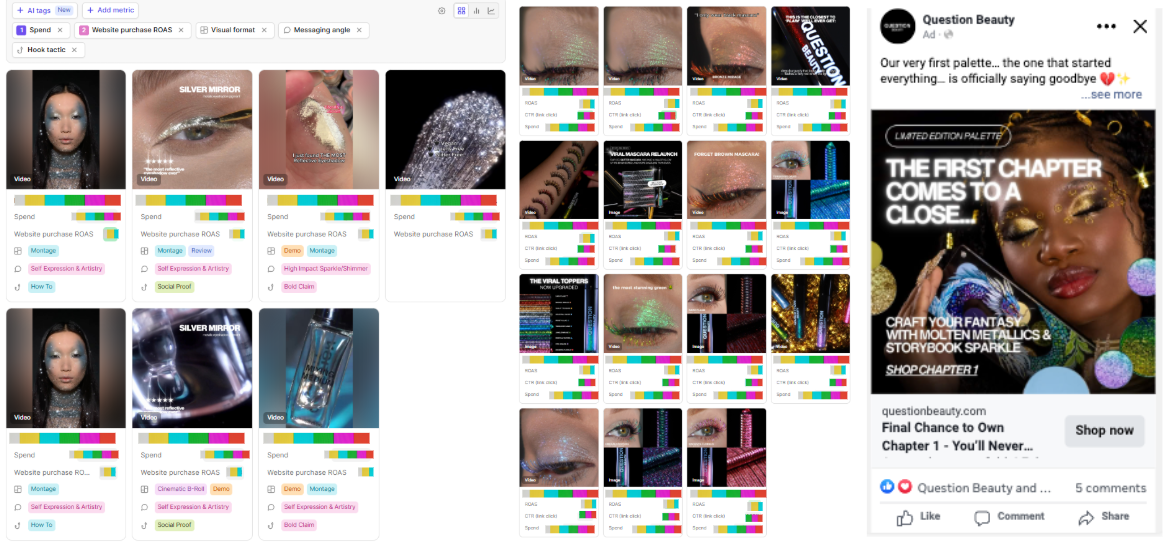
I leveraged Motion to conduct a forensic audit of existing creative performance, identifying high-performing visual patterns through the lens of ROAS (Return On Ad Spend). Rather than designing in a vacuum, I used these metrics to develop a grounded hypothesis on why specific ads were resonating.
This data-driven foundation allowed me to provide the design team with high-impact briefs focused on iterative variations of winning assets. However, to achieve true Category Leadership, I pushed beyond the existing data to diversify our creative output. I implemented a 'Dual-Track' testing strategy: exploring high-concept innovations on the organic feed to gauge sentiment, while moving the most statistically significant concepts directly into the paid ad pipeline for immediate scaling.
Strategic Synthesis
In a high-velocity startup environment, the transition from data to design often suffers from 'tunnel vision.' To combat this, I integrated Gemini as a strategic filter to stress-test my findings before finalising briefs.
Rather than using AI as a shortcut, I directed it to act as a Creative Strategist: analysing the core brief for blind spots, expanding our audience personas, and generating a wide spectrum of messaging hooks. This 'Human-AI Synthesis' ensured that every brief provided to the design team was not only grounded in performance data but also psychologically engineered to resonate across diverse customer segments, maximising our creative coverage from day one.
The Refinement Loop
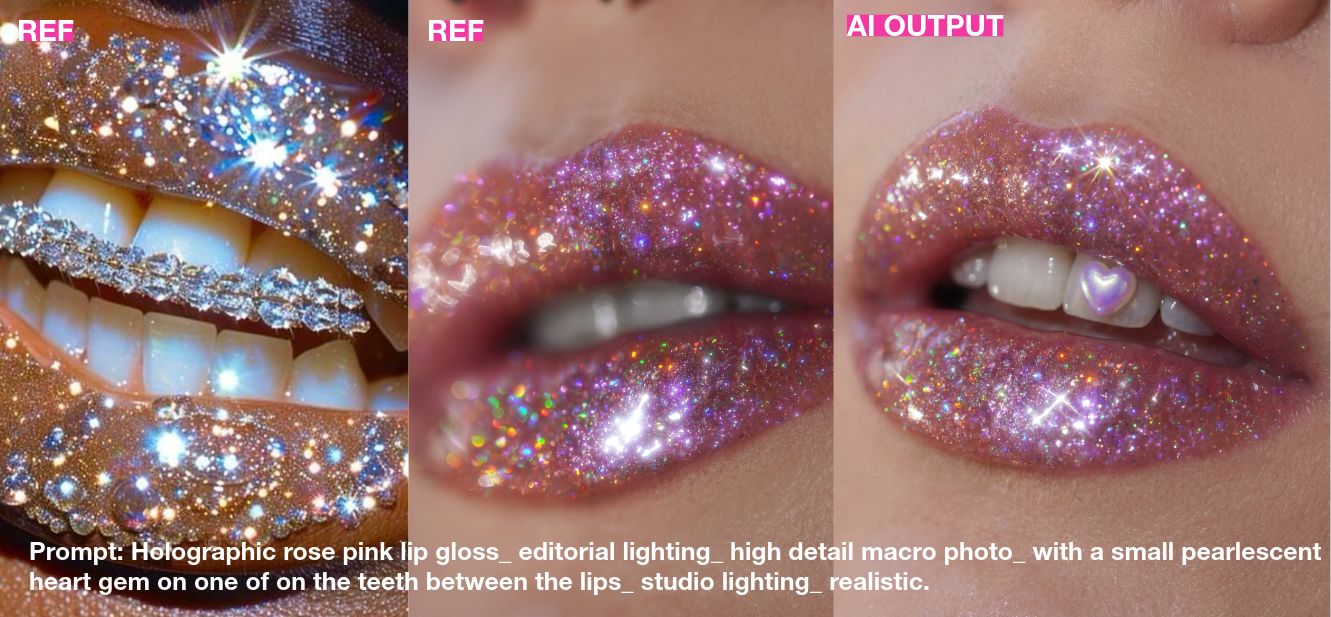
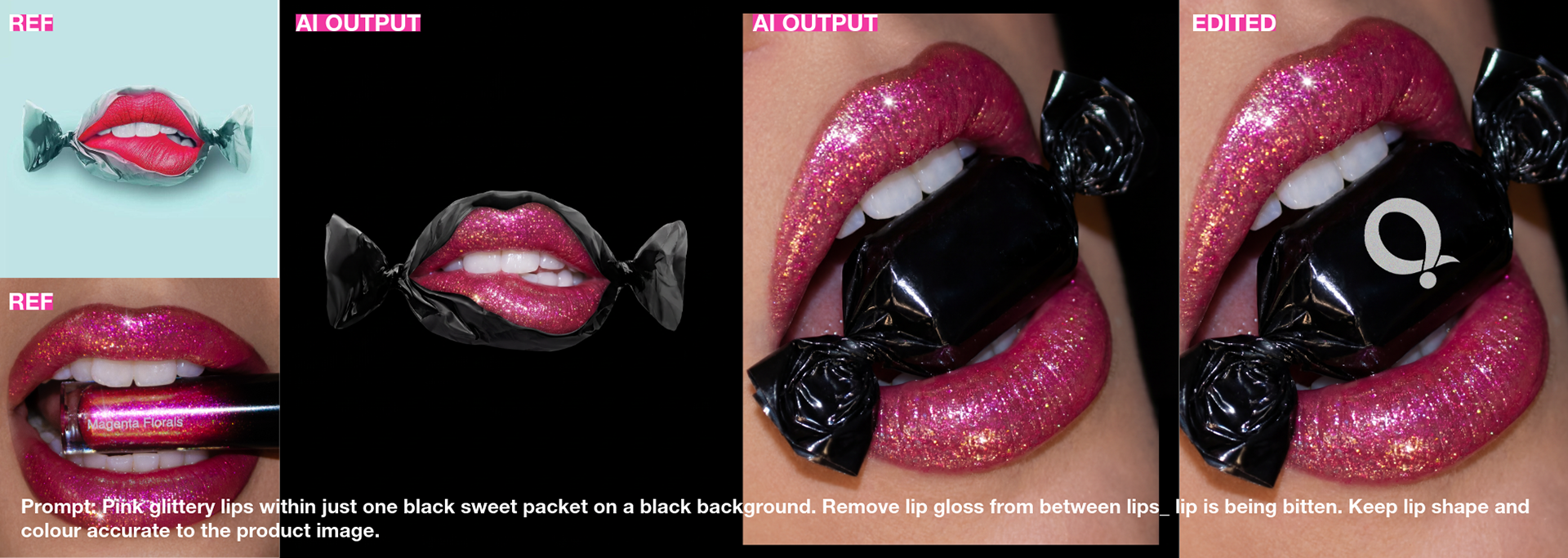
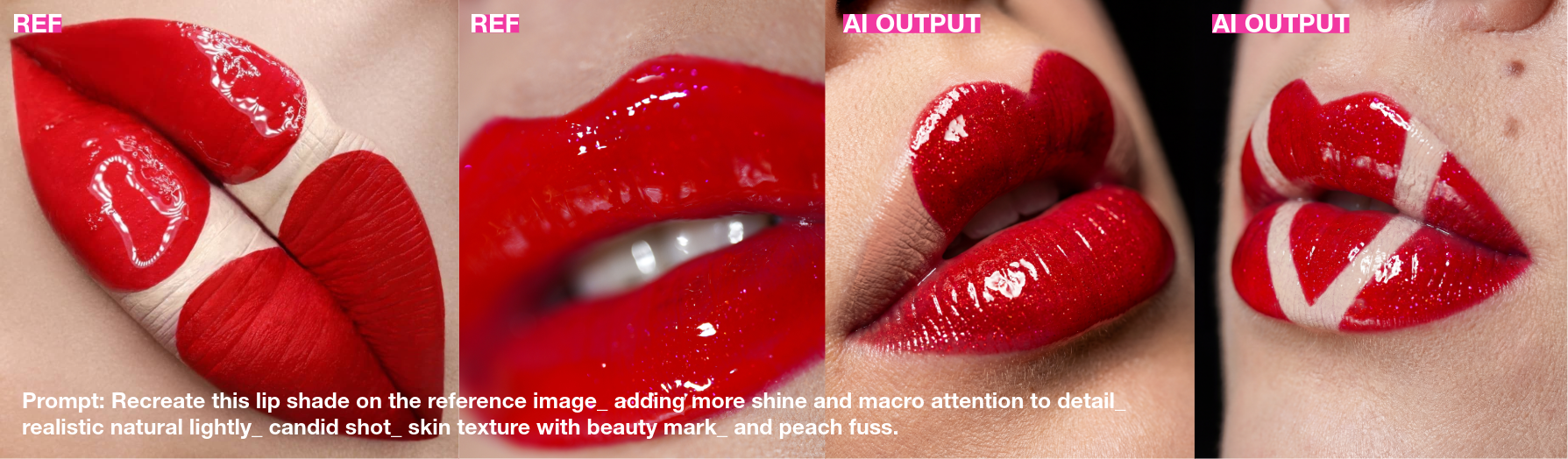
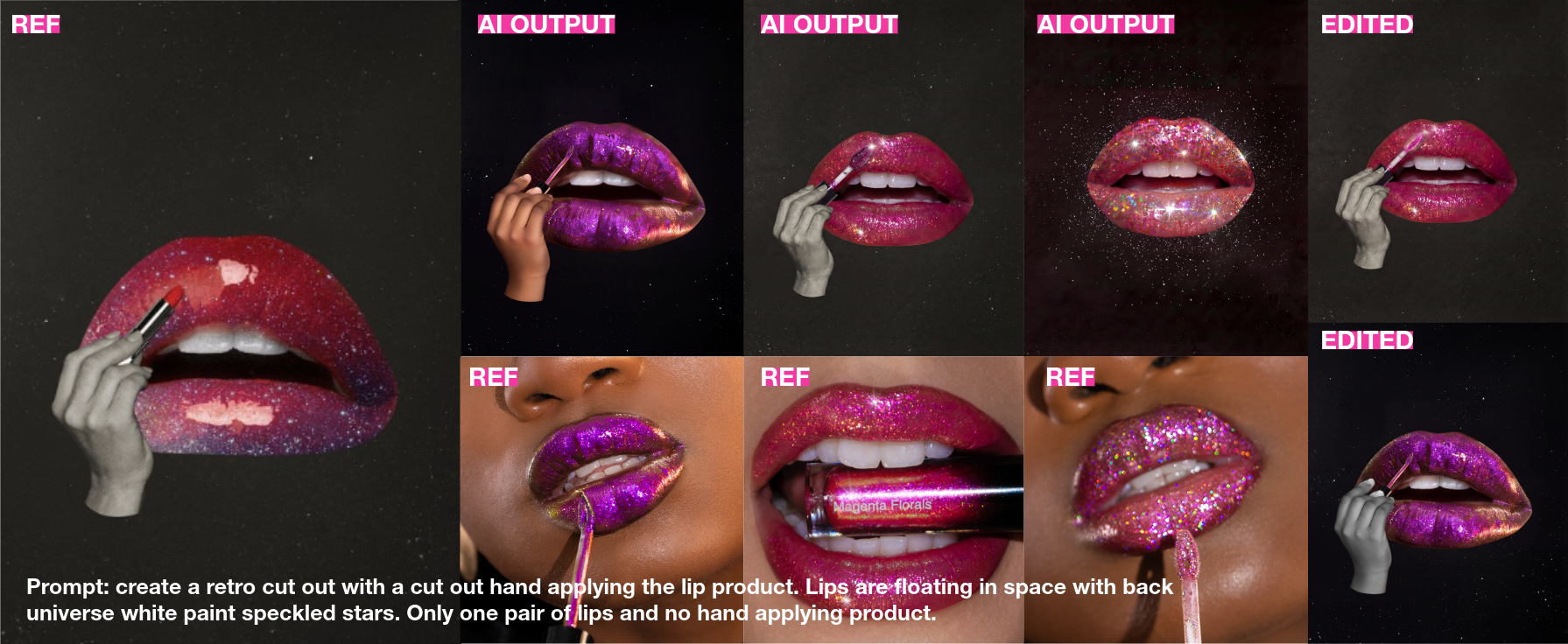
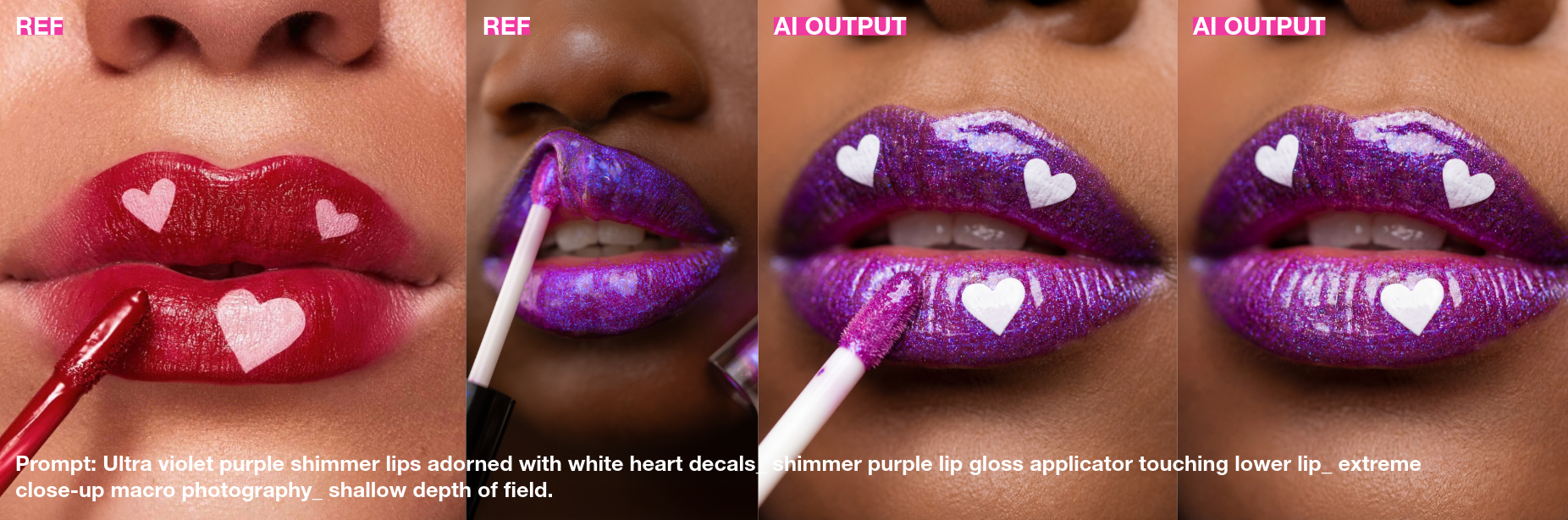
Scaling a high-volume social strategy often leads to 'creative fatigue' and a stagnant content pipeline. To solve this, I developed a Multi-Model Generative Workflow that transformed existing client assets and curated references from Kive into fresh, high-fidelity visuals.
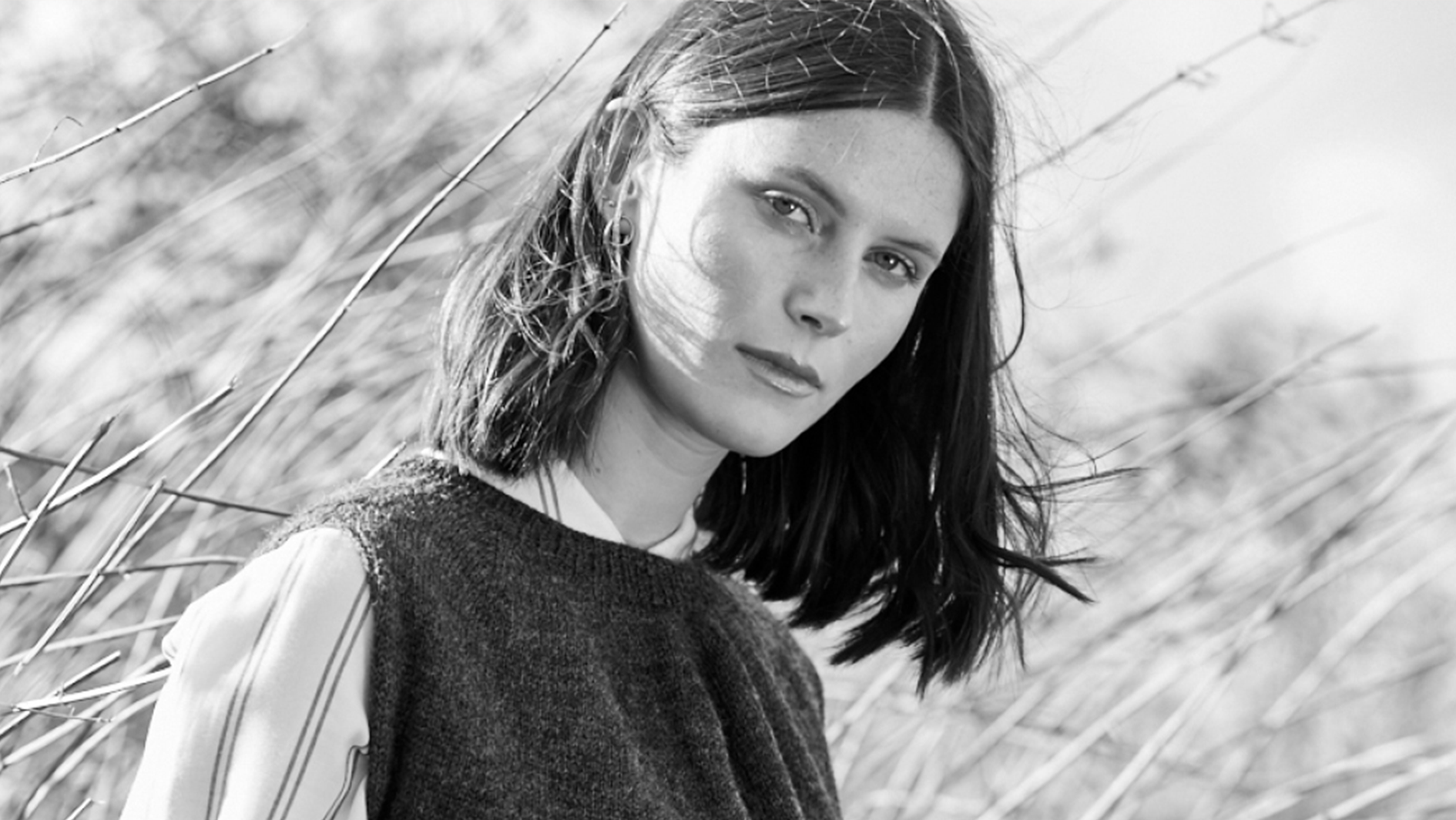
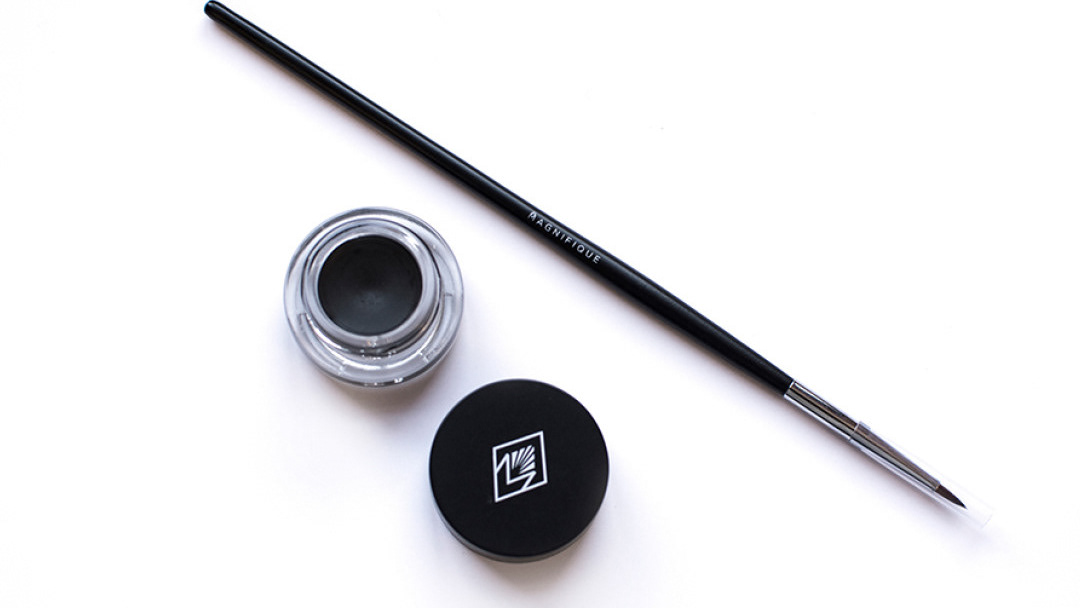
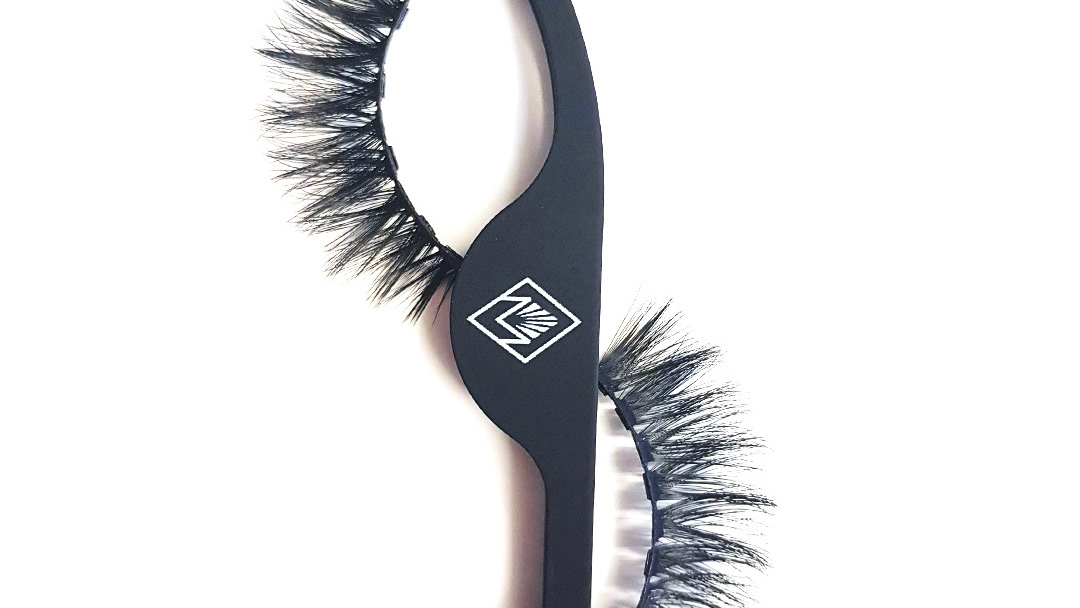
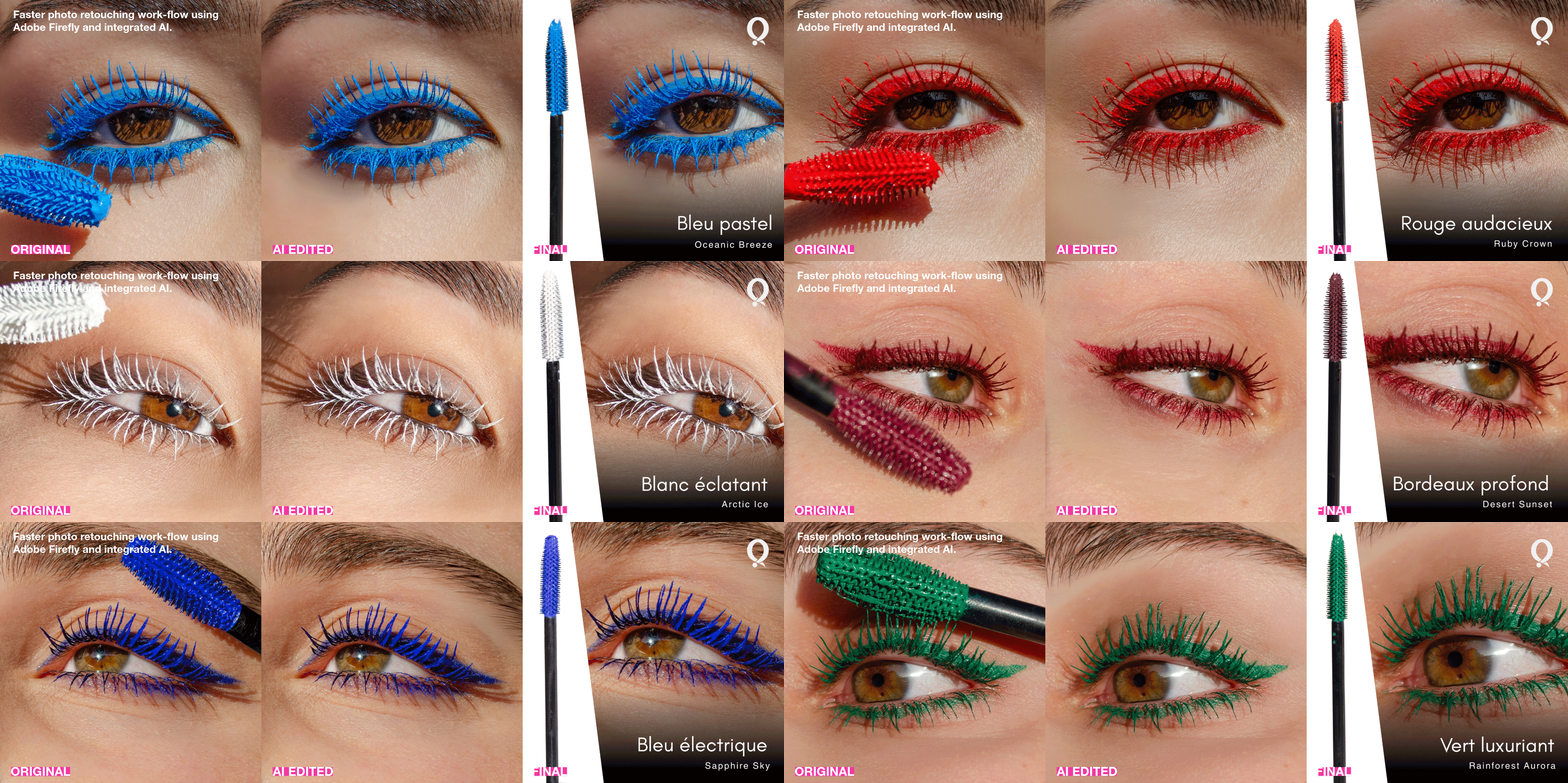
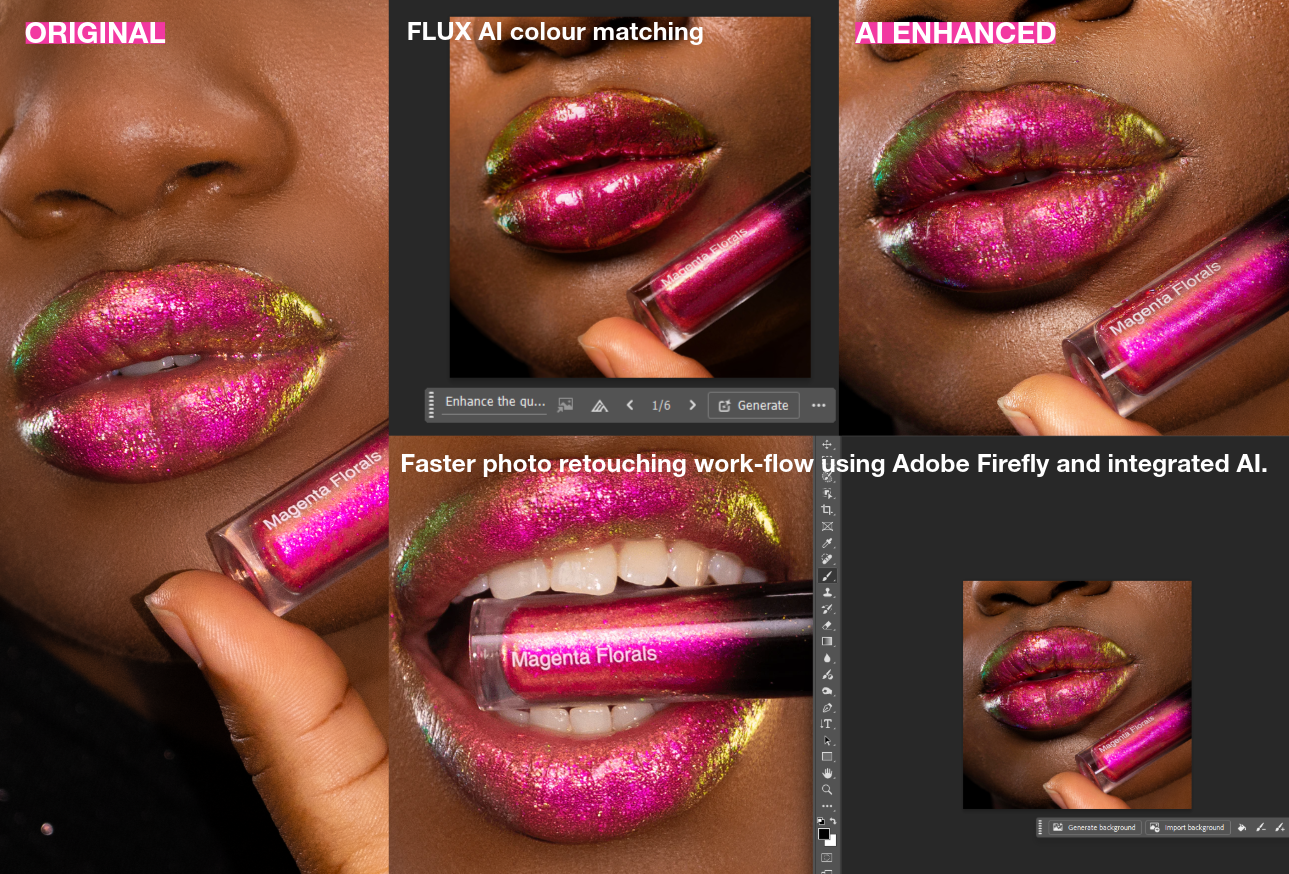
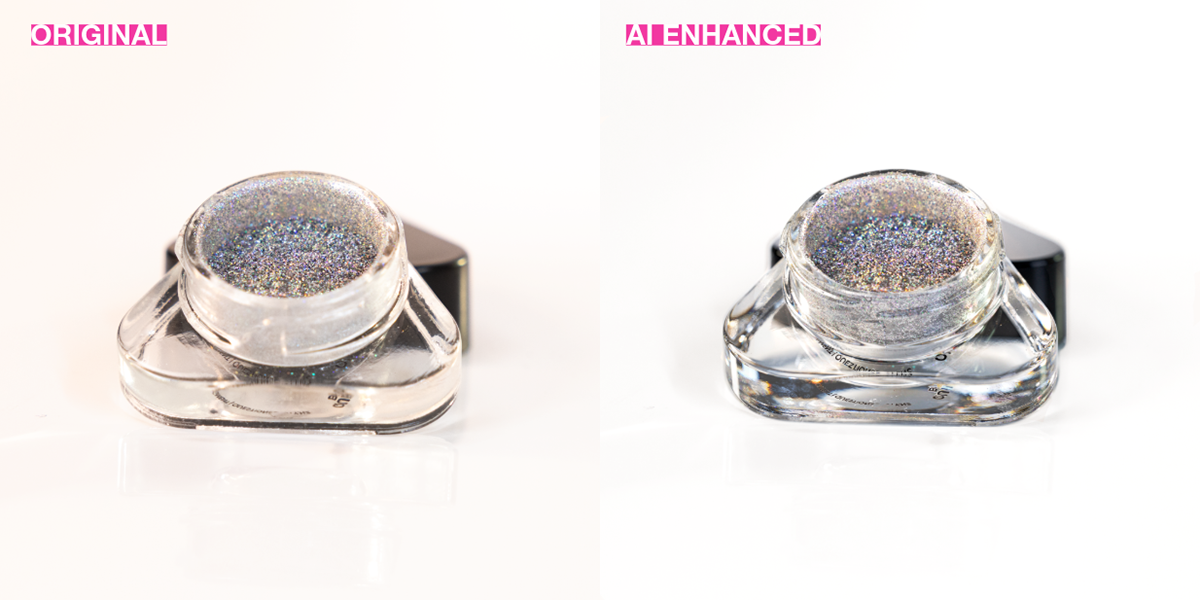
The core of this phase was a rigorous Aesthetic Quality Control loop. While AI provided the generative base via Midjourney and Nano Banana, I utilised a specialised stack of FLUX, Adobe Firefly and Nano Banana within Photoshop to inject 'Micro-Realism'—focusing on skin-pore authenticity, natural imperfections, and makeup luminosity. This hybrid approach eliminated the 'AI-generated' uncanny valley effect. Crucially, I maintained final creative authority through manual colour correction and compositing in Photoshop, ensuring that product shades and makeup swatches remained 100% true to the physical product—a non-negotiable requirement for the luxury beauty sector.
Efficiency Gains
Implementing this bespoke AI workflow fundamentally shifted the unit economics of our creative production. By automating the high-fidelity 'heavy lifting' while maintaining strategic oversight, I was able to scale output to 20 unique ad creatives and 14 organic creatives per week, not including variations. Alongside 25 comprehensive video and static briefs for the internal design team every week.
This workflow accelerated the pipeline from concept to live-ad by 10x compared to traditional methods, ensuring the brand could respond to performance data in real-time. Strategically, this high-velocity output significantly reduced the client’s reliance on expensive influencer seeding and removed the logistical bottlenecks of briefing external UGC creators. The result was a self-sustaining creative engine that lowered production costs while maintaining the high volume of fresh content required to drive consistent ROAS.
Platform-Native Hook Engineering
To maximise 'thumb-stop' impact and combat the 'ad blindness' that often degrades ROAS, I utilised Gemini to analyse high-performing social tropes and engineer 'High-Retention' text overlays. Rather than relying on generic copy, these hooks were psychologically tailored to mimic the organic, peer-to-peer communication style of TikTok and Instagram.
I then leveraged CapCut for rapid prototyping, applying platform-native typography and dynamic motion-hooks. This hybrid approach allowed us to benefit from high-end, AI-refined visual production while maintaining the authentic 'UGC feel' that is critical for driving professional-level conversions in a mobile-first environment.